
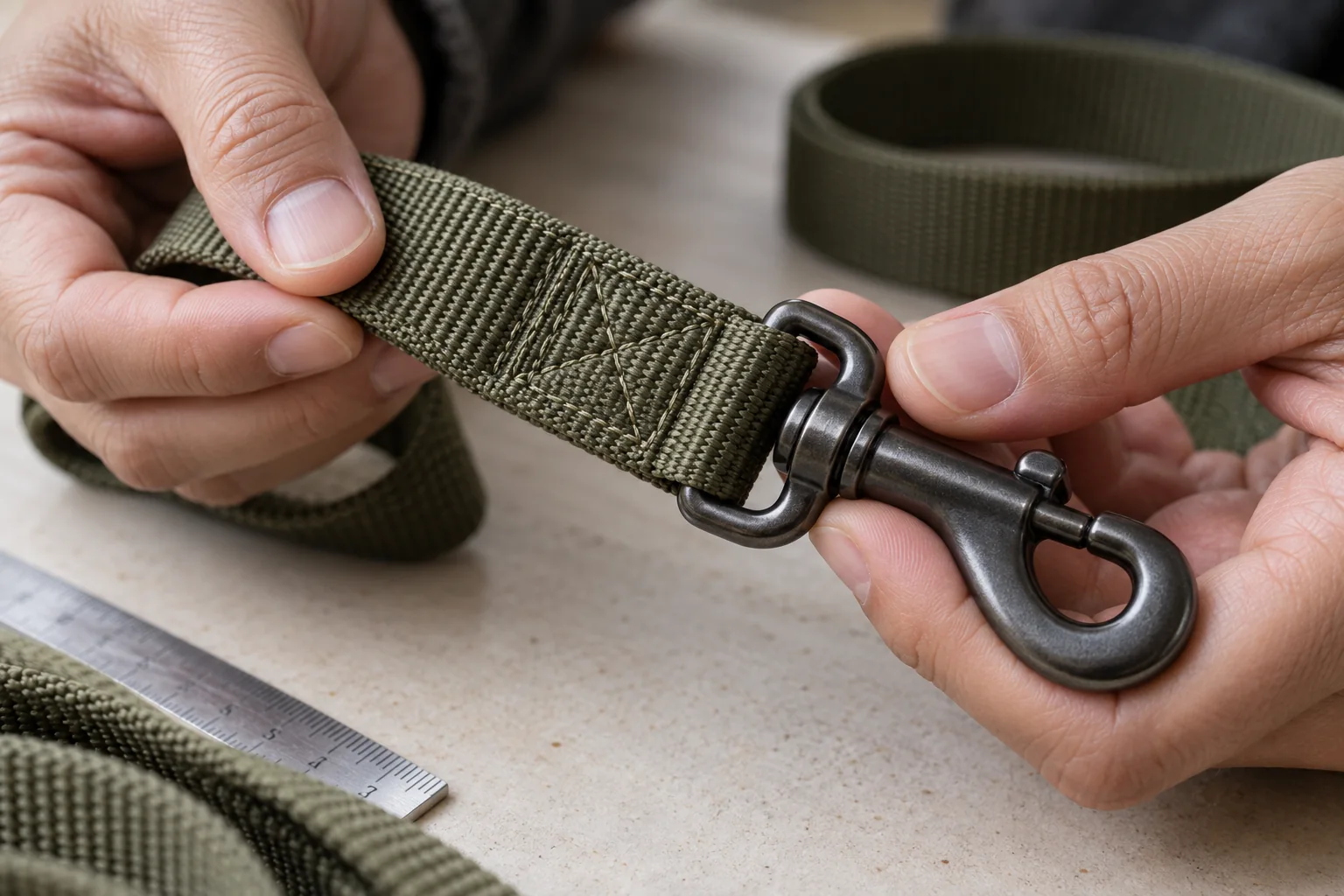
Agree the inspection basis before production
Start with the current product drawing, bill of materials, size chart, artwork, packaging files and approved sample. Identify the order and specification revision in the inspection record. If a requirement changes, document the change before judging the affected goods.
This guide is a suggested buying checklist. It does not represent completed testing or a fixed inspection service for every order. Agree the actual scope with the supplier and, where required, an independent inspector or laboratory. Our manufacturing and quality page provides the factory information available on this website.
Checks to include in the agreed plan
| Area | What to review | Record to keep |
|---|---|---|
| Materials | Specified webbing, fabric, padding, color, width and hardware references. | Material identification, measurements and comparison photos. |
| Sewing & assembly | Stitch construction, attachment positions, missed stitches, loose threads and exposed sharp edges. | Location photos and the agreed defect classification. |
| Hardware | Buckle engagement, clip closure, swivel movement, adjustment and finish. | Component identification and functional check results. |
| Dimensions | Approved measurement points, adjustment ranges, widths and tolerances. | Actual values by style, size and sampled unit. |
| Appearance & branding | Logo position, print direction, pattern alignment and color against approved references. | Photos showing the comparison and any variation. |
| Retail packaging | Correct item, size, barcode, language, artwork revision and included accessories. | Pack photos and barcode or label checks as agreed. |
| Cartons & quantities | SKU counts, assortment, carton marks and packing instructions. | Count records and carton identification. |
Separate visual checks from performance tests
A neat seam or a functioning buckle is useful inspection evidence, but it does not establish the breaking strength of a finished product. When performance matters, define a separate test requirement with the relevant technical team.
ASTM D6775-13(2024) is a method for determining breaking strength and elongation of textile webbing, tape and braided materials. Its material scope should not be presented as a blanket certification for a finished dog harness, collar or leash.
Specify the sample construction, method, conditioning, acceptance criteria and report requirements. Ask which sizes, colors or component combinations the evidence covers. A change in webbing, sewn attachment or hardware may require a review of whether existing results still apply.
Define sampling and defect decisions in writing
Agree the lot definition, sampling method, inspection quantity and treatment of defects before inspection. If a named sampling standard or an AQL plan is required, identify the full plan and acceptance rules with the inspector. A percentage written by itself does not define an inspection procedure.
Include examples of defects and their agreed classification. State who decides whether affected goods are reworked, replaced, inspected again or held. Keep the original result and the follow-up record linked to the same order and lot.
Create a record that supports an actual release decision
- Order, style, color, size, quantity and specification revision.
- Sample selection method and the units inspected or tested.
- Measured values, observations and clearly labeled photographs.
- Applicable test reports with identifiable samples and scope.
- Open issues, corrective action and the result of any repeat check.
- Release decision, date and the authorized approver.
Keep a simple distinction between “checked,” “accepted” and “still open.” A completed checklist with unresolved failures should not read as approval to ship.
Use the sizing guide to define repeatable dimensional checks and the RFQ workbook to raise inspection requirements before the quotation. For a branded collection, carry the same approved logo and packaging references through private-label development and final inspection.
References
External references explain the topics noted above; they are not test reports for HUIJIA products.