
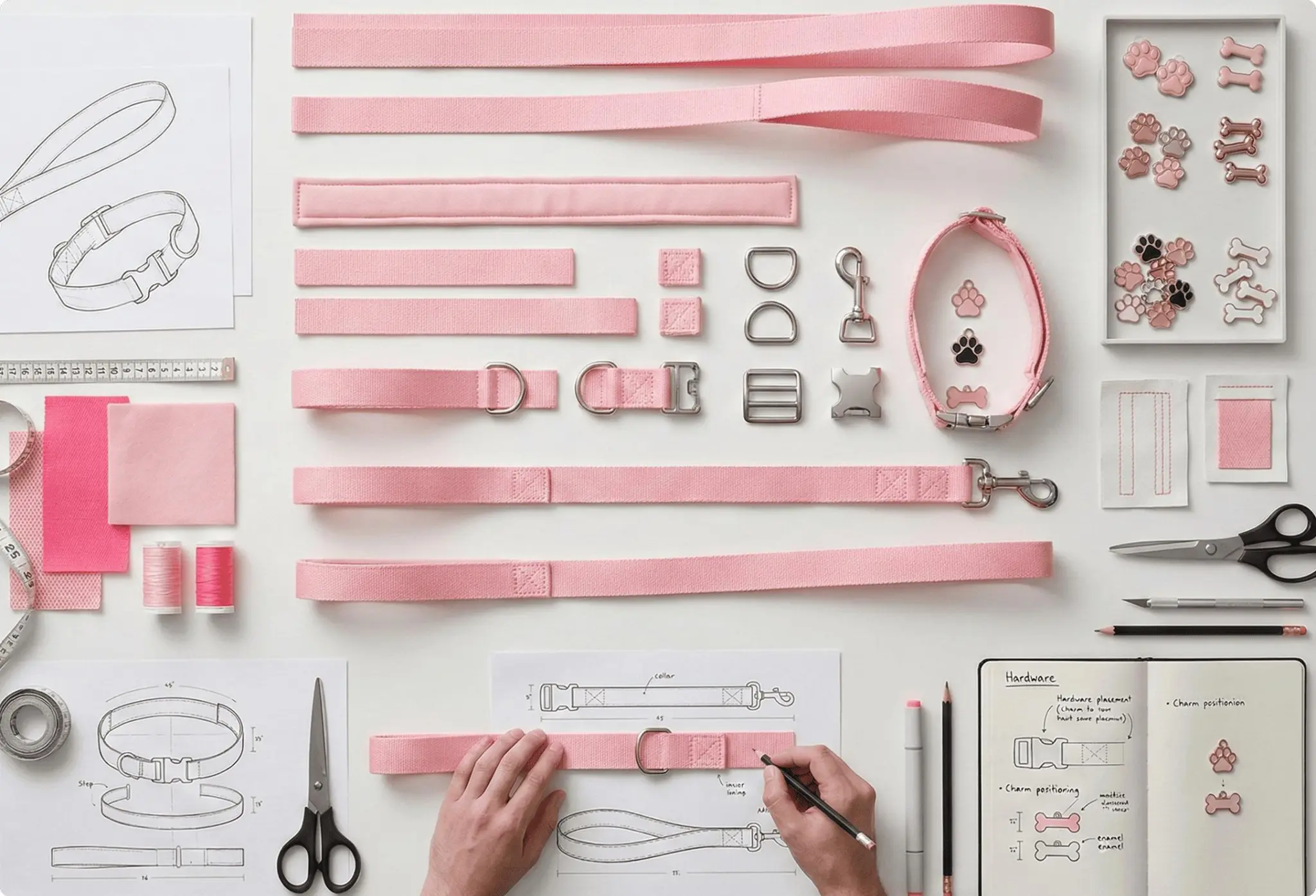
Start with the product reference
Choose a product link, a style code or a set of reference photos. Explain which features you want to keep and which you want to change. A photograph can communicate appearance, but it rarely defines every material, dimension or attachment point.
For a matching walking set, list each item separately: harness, collar, leash and any accessories. State whether the quotation should cover individual pieces or a complete set, and whether those items share one package.
What to include in your RFQ
| Requirement | Information to send |
|---|---|
| Product & use | Reference links or files, intended use, sales market and requested changes. |
| Quantity split | Units per product, color and size. Identify pieces versus complete sets. |
| Construction | Material, webbing width, padding, lining, hardware type and finish, where decided. |
| Dimensions | Size chart or drawing with measurement points, units, adjustment ranges and tolerances. |
| Branding | Logo file, proposed method, position, dimensions, print artwork and color references. |
| Packaging | Individual or set packaging, label artwork, barcodes, pack quantities and carton marks. |
| Quality & approval | Sample review steps, requested checks, test scope and acceptance criteria to agree. |
| Delivery | Destination and requested sample and bulk arrival dates; preferred shipping basis. |
If a requirement is undecided, write “To confirm” and ask for options. An explicit open question is more useful than an assumed specification.
Separate the quantity and price assumptions
A total order quantity does not explain how many units are needed in each style, color and size. A supplier may need to review those splits against material purchases, printing, logo setup and packaging requirements. Ask for the applicable minimums in the quotation.
For example, if a collar and leash are sold as one retail set, record the number of sets and the size combination inside each set. If they will also be sold individually, add separate lines. This avoids counting one set as one piece in one document and two pieces in another.
Request a breakdown of product pricing, sample charges, setup or tooling charges where applicable, packaging and freight. Include the quotation currency, validity and delivery basis in the comparison. Refer to our private-label process for the customization scope to discuss.
Attach files that can be matched to the brief
- Name each reference photo and drawing with the product or project code.
- Supply an editable logo or print file if available, plus a preview that shows the intended result.
- Identify the color reference system and request a physical approval sample when color is important.
- List the current revision of the size chart, artwork and packaging file.
- Put any retailer or laboratory requirements in a separate named attachment.
A reference image is not permission to reproduce another brand’s logo or artwork. Supply designs that your project is entitled to use.
Agree what must be approved before production
List who will approve the sample and what they will review: dimensions, fit, material feel, logo placement, hardware operation and packaging. Keep a record of accepted changes and the final specification revision.
Ask how a change after sample approval would affect cost or timing. Treat the requested delivery date as a planning input until the specification, order quantity, sample approval and shipping arrangement have been reviewed together. The quality inspection checklist helps turn general expectations into documented checks.
Download and complete the specification workbook
The workbook has two tabs: Project Brief for the shared requirements and SKU Breakdown for the product, color and size quantities. Fill the pale amber cells and save your own project copy.
Attach the completed workbook and supporting files when you contact us. If you do not yet have a full specification, send your product references and list the decisions that still need support.