
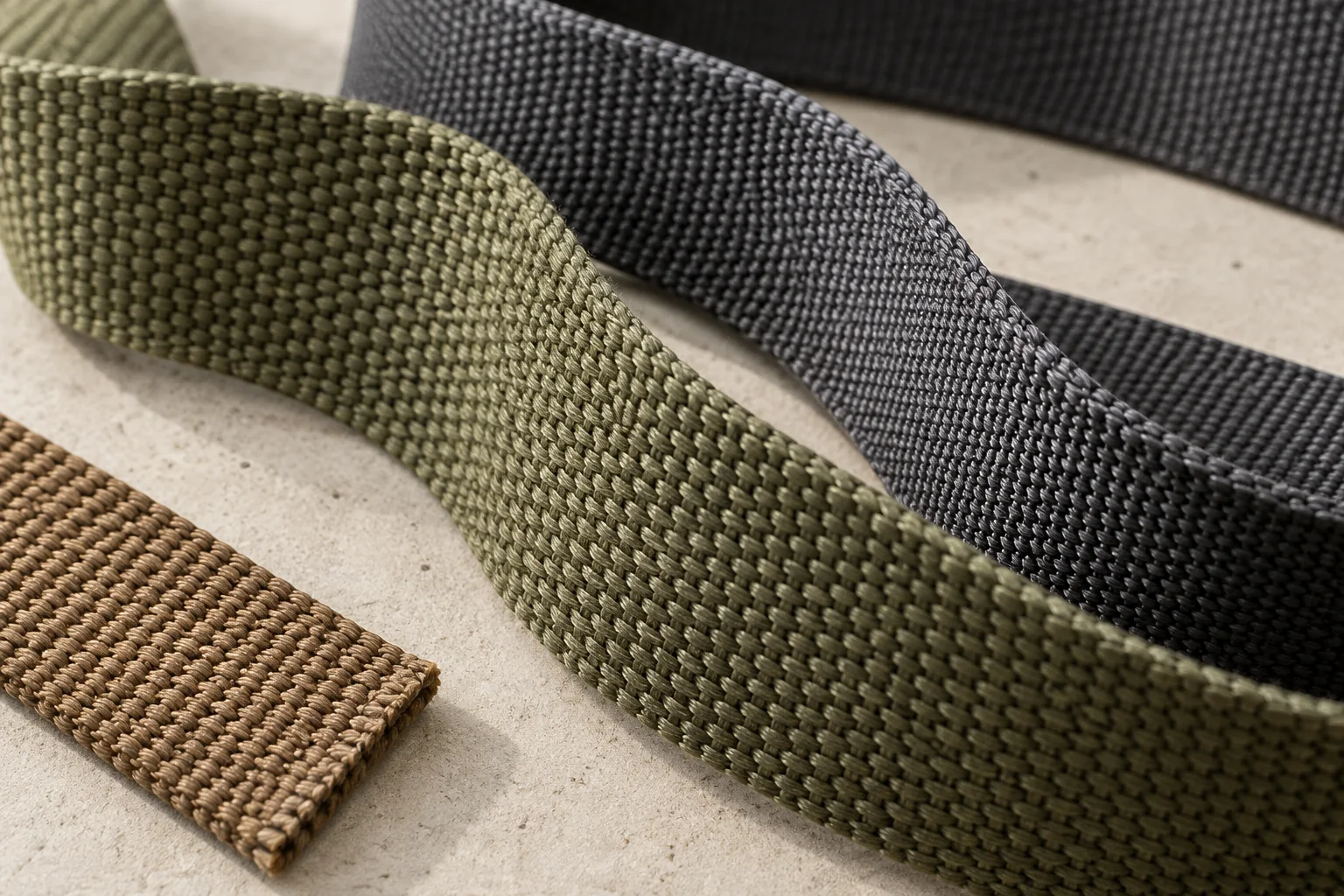
Compare the requirements that matter
| Buying question | Nylon | Polyester |
|---|---|---|
| Moisture and stretch | Wet conditions can affect stretch. Evaluate the selected webbing after the agreed conditioning. | Often considered where low stretch and water resistance are priorities. Verify the actual construction. |
| Print design | Confirm the available print or branding process on the chosen nylon construction. | Suitable polyester webbing can accept sublimation. Weave and surface texture affect detail. |
| Feel and appearance | Request a swatch in the actual width, finish and color. | Request the same swatch details; polyester can have different textures and finishes. |
| Strength | Request evidence for the specified material and finished assembly. | Use the same verification approach; fiber name alone does not establish a load rating. |
| Hardware fit | Check width, thickness, routing and adjuster grip together. | Check those same points on the selected material and hardware combination. |
Material behavior is a starting point for sample selection. Supplier references: Strapworks webbing FAQ, webbing overview and printing guidance. These references do not verify a HUIJIA product specification.
Review the printed sample at its actual width
For a collection with a detailed repeat pattern, begin with the narrowest strap in the range. A design that reads clearly on a wide harness panel may lose detail on a narrow collar or leash. Ask for a sample that shows the actual print scale, direction and repeat.
Strapworks’ polyester printing guide describes different results on smooth and coarse constructions. Use that distinction when requesting swatches: compare the selected print on the selected webbing, then review its appearance after your agreed wear or care checks.
For a matching walking collection, compare the harness fabric, collar, leash, labels and packaging together. The same color reference can appear different across substrates. Agree which physical sample controls approval for each component.
Specify more than the fiber name
- Webbing: fiber, weave, width, thickness, finish and color reference.
- Hardware: buckle or clip type, slot width, surface finish and connection details.
- Sewn joints: attachment locations and the approved stitch construction.
- Branding: print, woven label, patch or other agreed method and position.
- Use conditions: the intended activity, exposure and care instructions to evaluate.
Check that the webbing feeds through the adjuster as intended, the buckle closes fully and the strap does not slip under the agreed assessment. A dimensional match on paper should still be checked on the assembled sample.
Compare samples using the same review sheet
Ask for nylon and polyester options with the same target width and a clearly recorded construction. Label each swatch and finished sample. Record the differences in hand feel, flexibility, appearance, print clarity and hardware operation before choosing a production specification.
If performance testing is required, agree the method, conditioning, sample identification and acceptance criteria with the responsible laboratory or quality team. Review the report’s scope: a result for a strip of webbing does not automatically apply to a complete leash, collar or harness.
Keep cost and quantity assumptions alongside the comparison. Custom dyeing, artwork, special hardware and packaging may change the quoted minimums and timing. Request those details instead of assuming one material is always cheaper.
Turn the material choice into a quotation brief
Start from custom dog leashes or custom dog collars, identify a reference construction and record your preferred material. If the choice is still open, ask for two separately specified options.
Use the RFQ checklist and workbook to carry the approved material, color and hardware into the quotation. Use the inspection checklist to define what must stay consistent in production.
References
External references explain the topics noted above; they are not test reports for HUIJIA products.