Choose who will buy your first range
Start with the buyer and the place you will sell. A pet shop buying wholesale needs a clear assortment and reorder codes. A shopper on your own website needs accurate product photos, dimensions and care information. A marketplace may have its own listing and packing requirements; check the current rules for your chosen channel before approving labels.
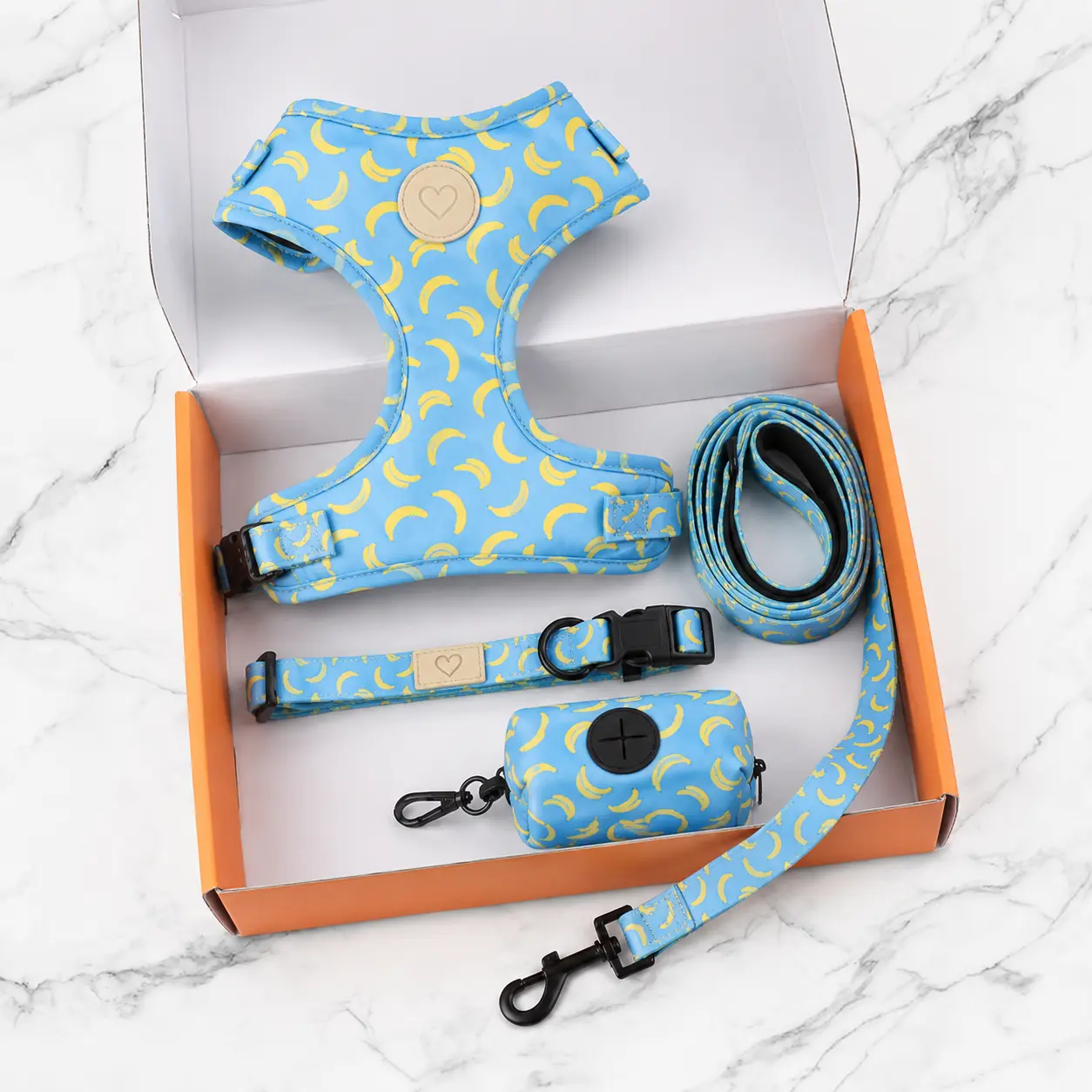
Write one sentence that explains your first range, such as a coordinated printed walking collection for independent pet shops. Treat this as a product brief, not proof of demand. Review buyer feedback, existing sales or a small sample presentation before committing to a wider range.
Decide whether you will resell an existing brand or sell under your own brand. If speed matters more than custom details, ask about available stock. If your design needs a specific print, hook or pack, allow time for sampling and production. The wholesale sourcing guide explains these supplier routes.
How many leash styles should you launch?
Begin with the fewest styles that can test your buying proposition. One agreed construction with a limited color choice is easier to specify, photograph and reorder than several unrelated products. Add variants when they serve a clear buyer need and the order minimum works for each one.
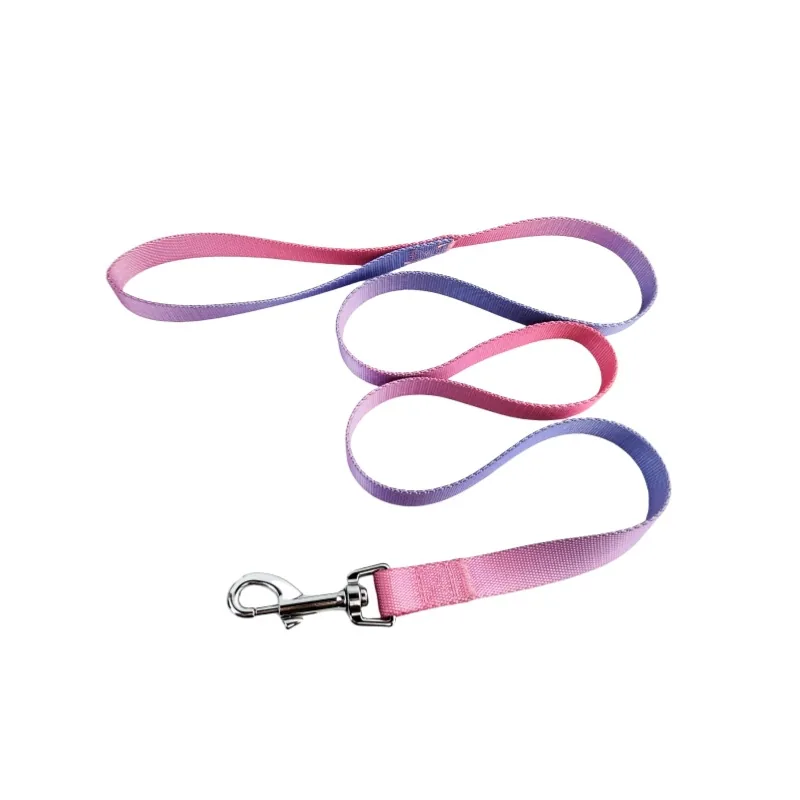
Choose a starting style from the custom dog leash collection. Flat webbing suits a brief built around repeat artwork; rope gives a different grip and appearance. Review a bungee or retractable design as a separate construction with its own checks. Use the leash selection guide to set length, grip and hardware.
| Decision | Illustrative plan | Confirm before ordering |
|---|---|---|
| Construction | One printed webbing leash style. | Finished dimensions, fiber, stitching and hook reference. |
| Assortment | Two proposed colors within that style. | Whether the supplier accepts the split and any artwork minimum. |
| Selling unit | One leash in its own retail pack. | Label, barcode, included information and packing charge. |
| Order quantity | Request a quote for 100 pieces. | Accepted quantities per color and total production quantity. |
This example is a planning exercise, not a stock offer or accepted order. HUIJIA PET programs start from 100 pieces per style, or 100 complete sets for products ordered as sets. Confirm the selected materials, artwork, packing and size/color split in the quote.
What should your first-order cost sheet include?
Ask each supplier to quote the same specification, quantity and delivery scope. Record product cost, sample and setup charges, retail packing, inspection and transport separately. Mark each item as included, separately quoted or still open. A blank cost is not zero.
For an internal planning sheet, calculate the goods subtotal as the quoted unit price multiplied by the accepted quantity. Add the agreed one-time charges and the delivery costs for the same destination. Keep any estimated charge clearly marked until the responsible service provider confirms it.
| Cost group | What belongs on the line |
|---|---|
| Product and customization | Leashes, agreed logo method and any separately quoted artwork or tooling setup. |
| Sampling and review | Samples, sample delivery, agreed tests or inspection services. |
| Retail and transport packing | Selling-unit packaging, labels, barcodes, cartons and packing work where separately charged. |
| Delivery to your destination | Quoted transport stages and any excluded clearance, duties, taxes or final delivery costs to confirm. |
| Selling and replenishment | Your channel fees, order fulfillment, returns allowance and budget for the next order. |
Keep the sourcing subtotal separate from the wider launch budget. Do not set a retail price from the factory unit price alone. Review the complete selling costs for your chosen channel, and avoid treating an illustrative margin as a promised business result.
What must you approve before buying in bulk?
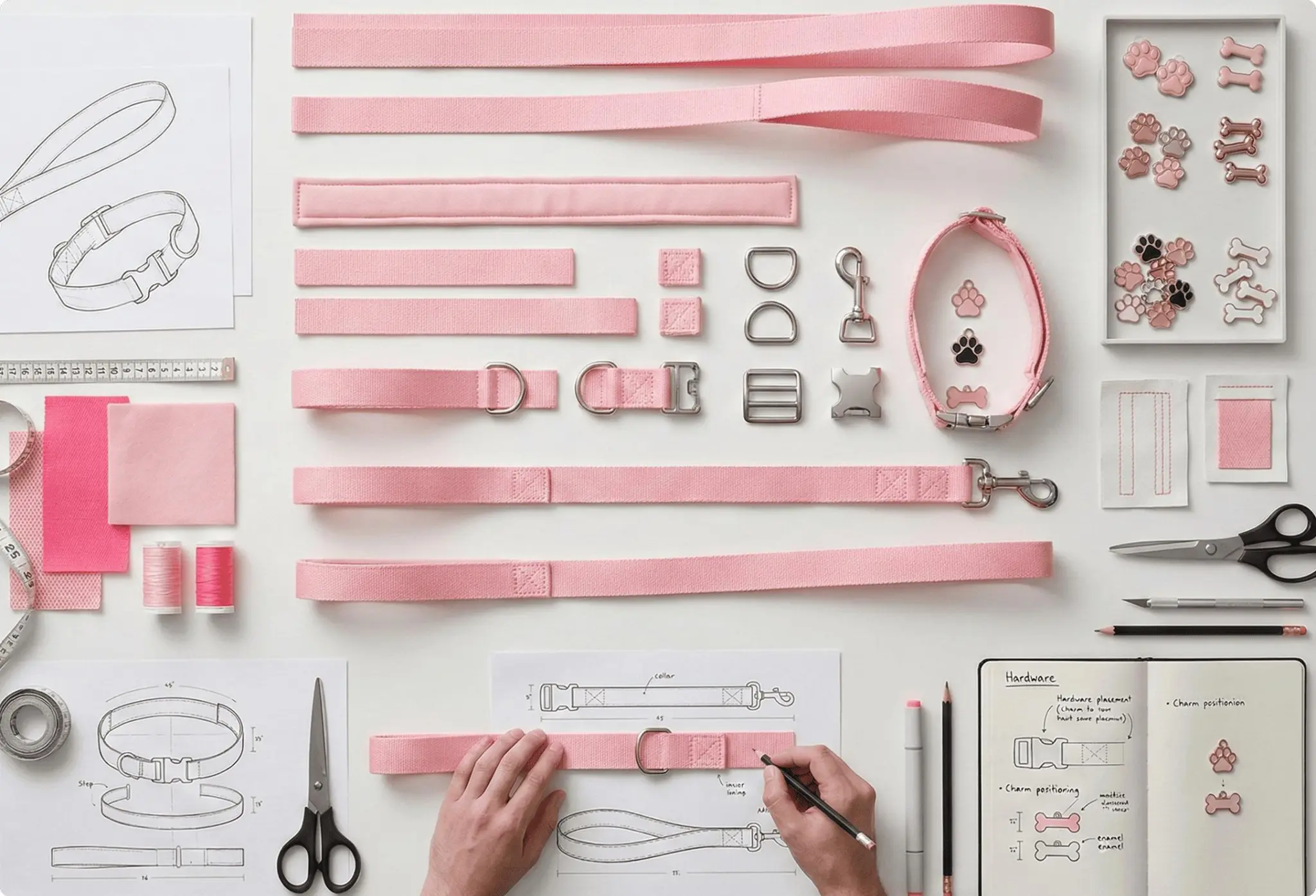
Approve a finished sample against a written specification. The record should identify the product code, length and measurement endpoints, webbing width or rope diameter, handle, hook, artwork version and retail pack. Date the approval and keep photos of the details you accepted.
- Measure the sample using the same method named in the brief.
- Check sewn ends, edge finish, hook closure and swivel movement.
- Try the hook on the ring of the matching collar or harness.
- Review print direction, logo visibility and color on the finished item.
- Check the label, barcode and contents of the packed selling unit.
If you plan to make a strength or performance claim, agree the relevant test method and acceptance criteria for the complete leash. A component test does not rate every finished assembly. Record the actual sample and scope of any supporting report.
The quality inspection checklist helps organize the review. If a sample changes after approval, update the specification and approve the changed part before it goes into production.
Prepare product information and incoming checks
Build your listing from the approved sample. Photograph the full leash, handle, clip, branding and packed unit. State the actual dimensions and options, and distinguish a single leash from a collar-and-leash set. Get the agreed care and use information for that construction before finalizing the product page or pack.
Check the requirements that apply to your destination and sales channel with the responsible specialists. A supplier listing or a generic material description does not establish that your exact product and label meet every market requirement.
Before shipment, agree the inspection scope and how a nonconforming result will be handled. At receipt, reconcile quantities and variants with the packing list, inspect the agreed sample of goods and record any damaged or incorrect units. Keep affected goods separate while the supplier reviews the evidence.
Set the public launch date from the arrival and inspection plan. Factory dispatch is only one step; transit, destination handling and receiving still need time.
How do you plan the next bulk order?
Track sales and returns by the same SKU codes used in your order. Record why buyers return or question a product: unclear length, color expectations, packing damage or another observed issue. Use this evidence to decide which variants need a reorder and which need a revised sample.
For each reorder, send the approved specification revision, artwork, component references and quantity by variant. Ask the supplier to confirm availability and the current schedule, and to identify proposed substitutions before production. Recheck any changed hook, material or pack against the approved reference.
Review replenishment before the best-selling variant runs out. Base timing on your own sales history and the supplier's confirmed production and delivery plan; do not reuse a first-order schedule as a standing promise.
What should I send HUIJIA PET to start?
Send the selected style or reference image, target market, dimensions, quantities by color and size, artwork and packing brief, delivery destination and requested arrival date. Use the RFQ checklist and workbook to collect the details, then request a quote for that exact range.
About this sourcing guide
Prepared by HUIJIA PET for brands planning a first leash order. The assortment and cost-sheet examples are planning tools, not customer case studies, price offers or earnings forecasts. Confirm specifications, availability, order minimums and delivery terms in the written quotation. See our manufacturing information and private-label development options.